SA Cladding — Adelaide Hebel Specialists
The Ultimate Guide to Hebel Flooring Installation: Tips and Best Practices
Everything homeowners and builders need to know about Hebel floor installation — from site preparation and step-by-step process through to common mistakes, product differences, and when to bring in the professionals.
Hebel flooring has become a go-to choice for new residential builds and multi-level commercial projects across Australia. Made from autoclaved aerated concrete (AAC), Hebel floor panels are lightweight, strong, fire-resistant, and deliver excellent thermal and acoustic performance — qualities that make them a natural fit for South Australia’s climate and building standards.
But good materials only perform well when installed correctly. This guide covers everything you need to know about Hebel flooring installation — from what to prepare before work begins, to the most common mistakes that compromise a finished floor. For a full overview of SA Cladding’s Hebel flooring solutions, visit the service page directly.
What You Need Before Starting a Hebel Flooring Installation
Preparation is where Hebel flooring installations succeed or fail. Rushing into the install without confirming the basics below is the fastest route to costly rework.
- ▶
Confirmed structural support. Hebel floor panels are installed over steel or timber joists. The framing must be in place, correctly spaced to manufacturer requirements, and confirmed by the builder or structural engineer before any panels are ordered or delivered. - ▶
Builder plans and span details. SA Cladding installs Hebel flooring following builder specifications. Panel layout, span direction, and load requirements need to be documented and on site before installation begins. - ▶
Site access for delivery and craneage. Hebel panels are large and heavy enough to require mechanical handling. Confirm vehicle access, crane or telehandler requirements, and a clear delivery path before scheduling materials. - ▶
Correct panel selection. Hebel floor panels come in different thicknesses and strengths suited to different span and load requirements. Selecting the wrong panel for the application is a compliance and structural risk. Always confirm panel specification with your installer or engineer. - ▶
Substrate and bearing surface condition. Joist tops must be clean, level, and free from debris. Any out-of-level framing should be corrected before panels are laid — attempting to compensate during installation leads to cracking and uneven finished surfaces.
Step-by-Step Hebel Floor Installation Overview
While every project varies in scope and complexity, the core installation sequence for Hebel flooring follows a consistent process. Here is how SA Cladding approaches a standard Hebel floor installation:
Once installed correctly, Hebel floor panels create a stable, thermally efficient base that accepts a range of surface finishes — rendered, tiled, coated, or covered depending on the application.
Common Hebel Flooring Installation Mistakes to Avoid
Most problems with Hebel flooring emerge not from the product itself but from how it is installed. These are the most frequent errors seen on site:
Incorrect joist spacing
Hebel floor panels have specific maximum span requirements based on panel thickness and load. If the joist centres do not match the panel specification, deflection and cracking will follow. Always confirm framing layout before ordering materials.
Poor joint treatment
Panel joints that are not properly filled and treated become visible cracks in the finished surface — particularly under tiles. Joint treatment is a critical step that is sometimes skipped or rushed when projects are under time pressure.
Cutting without dust control
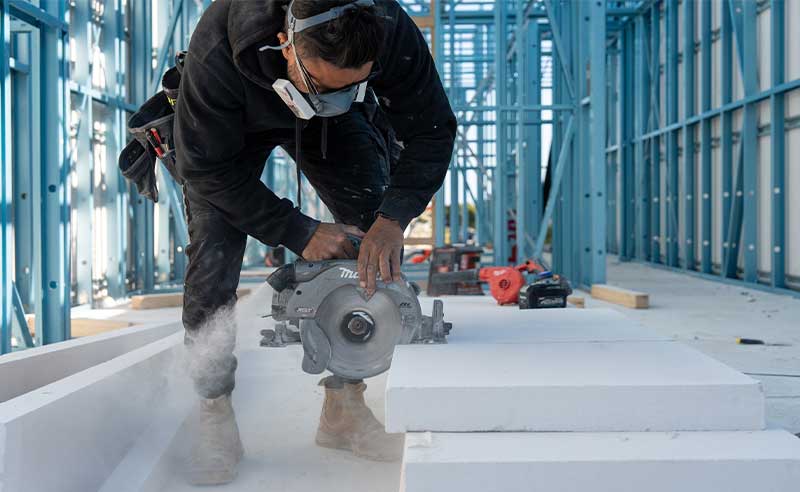
Cutting AAC panels produces fine silica dust. On-site cutting must be done using appropriate equipment and respiratory protection. This is a health and safety non-negotiable — not a discretionary precaution.
Inadequate bearing at panel ends
Hebel panels require minimum bearing length at each support point. Insufficient bearing causes panel ends to crack under load — a structural issue that is difficult and expensive to rectify after finishing trades have completed their work.
Wet conditions during installation
Hebel AAC is porous and will absorb water if left exposed to rain. Panels installed in wet conditions or stored on-site without weather protection can take on moisture that weakens adhesive bonds and delays finishing trades by days.
Wrong fixing system
Standard framing screws and fixings are not appropriate for Hebel floor panels. Manufacturer-specified fixings must be used at the correct spacing. Using incorrect fasteners voids product warranties and risks structural non-compliance.
Hebel Power Floor vs. Standard Hebel Floor Panels: Installation Differences
The Hebel product range includes standard AAC floor panels and the Hebel Power Floor system, which is designed for higher-load and longer-span applications. Understanding the difference matters because the installation method, fixing requirements, and structural design assumptions vary between the two.
| Factor | Standard Hebel Floor Panels | Hebel Power Floor |
|---|---|---|
| Primary use | Standard residential floor spans | Longer spans, higher load applications |
| Reinforcement | Standard AAC composition | Steel-reinforced for increased strength and span |
| Handling | Lighter; can be manoeuvred manually on smaller jobs | Heavier; mechanical handling typically required |
| Fixing method | Per manufacturer spec — confirmed at quote stage | Specific fixing requirements per engineering design |
| Structural design | Standard residential framing systems | Engineering sign-off typically required |
For a deeper understanding of panel types, dimensions, and applications, the Hebel panels guide on the SA Cladding website covers the full range in detail.
When to Call a Professional for Hebel Flooring
Hebel flooring is not a suitable DIY project for most homeowners, and even experienced builders should engage a specialist installer for anything beyond the most straightforward scope. Here are the situations where calling a professional is not optional — it is necessary:
- ▶
Any second-storey or multi-level installation. Structural loads, engineering requirements, panel selection, and safe work practices on elevated sites all require specialist knowledge and licensing. - ▶
Projects requiring engineering sign-off. Power Floor systems and commercial applications typically require a structural engineer’s design and inspection. This must be coordinated through your installer, not attempted independently. - ▶
Where Australian Standards compliance is required for inspection. All residential and commercial Hebel floor installations must comply with Australian Standards. Non-compliant work will fail inspection, delay occupation, and require remediation at your cost. - ▶
Apartments and multi-residential projects. Inter-tenancy floor systems are subject to specific acoustic and fire separation requirements. These cannot be achieved without an experienced installer who understands the full system — not just the panel. - ▶
Any project requiring mechanical handling. Hebel floor panels require appropriate equipment for safe lifting and placement. Attempting to manhandle large panels without the right gear is a safety risk for workers and a damage risk for the product.
SA Cladding is a fully licensed and insured Adelaide specialist with over five years of Hebel flooring experience across residential and commercial projects. Their team follows method statements, safe work practices, and Australian Standards on every job — with documentation and zero-defect sign-offs at handover. For the full scope of what is covered, explore SA Cladding’s Hebel flooring solutions.
FAQs: Hebel Flooring Installation
Can Hebel flooring be installed by a non-professional?
For most applications — particularly second-storey residential, multi-res, and commercial installations — Hebel flooring requires a licensed, accredited installer. The product must be fixed to manufacturer specifications and Australian Standards, which demands specialist knowledge of panel selection, span limits, fixing systems, and joint treatment. Attempting installation without that expertise risks structural non-compliance, failed inspections, and costly remediation.
What adhesive is used for Hebel floor panels?
Hebel floor panel installations typically use a manufacturer-specified AAC adhesive or mortar product at panel joints, combined with mechanical fixing to the supporting structure. The exact adhesive product and application method depends on the panel system and the specific project requirements. Your installer will confirm the correct products at quote stage — using off-specification adhesives is a common source of joint failure.
How long does Hebel flooring installation take for a standard home?
Installation time varies depending on floor area, site access, panel type, and whether finishing trades (rendering, tiling) are in scope. For a standard single-storey home, the panel installation phase typically takes one to two days. Multi-level or larger-footprint projects take longer. SA Cladding agrees on firm timelines during the quoting stage. To get an accurate estimate for your project, contact the team here.
What are the most common issues with Hebel floor installation?
The most common problems are cracking at joints (from inadequate joint treatment or incorrect joist spacing), panel movement (from insufficient bearing or wrong fixing systems), and moisture damage (from wet weather exposure during or after installation). All of these are preventable with correct installation practice. Selecting a licensed, experienced installer like SA Cladding eliminates the majority of these risks before they arise.
Planning a Hebel Flooring Installation in Adelaide?
Contact the SA Cladding team for expert advice and a free, itemised quote. Fully licensed, accredited, and locally experienced — delivering compliant Hebel floor installations across Adelaide’s residential and commercial sector.