
SA Cladding | Adelaide Hebel Specialists
What Is a Hebel Wall? A Simple Guide for Adelaide Homeowners
Understand how a Hebel wall is built, why it suits Adelaide homes, and how it compares to traditional brick veneer, so you can decide with confidence.
If you have been researching a new build or renovation in Adelaide, you have probably come across the term Hebel. It appears often in modern construction, yet many homeowners are not quite sure what it means. So what is a Hebel wall, exactly, and why has it become such a popular choice across South Australia?
What This Guide Covers
Below, we explain how a Hebel wall is constructed. Next, we look at the benefits it offers Adelaide homes. Finally, we compare Hebel walls to traditional brick veneer. Whether you are planning a project or simply curious, this guide gives you a clear, practical understanding of the material.
Understanding Hebel Wall Construction
A Hebel wall is built from autoclaved aerated concrete, usually shortened to AAC. In simple terms, it is a lightweight form of concrete. The material is made by combining sand, cement, lime, gypsum, water, and an expansion agent. The mix is then cured under high-pressure steam.
During curing, the expansion agent creates millions of tiny air pockets throughout the material. As a result, the finished panel is strong yet remarkably light. Those air pockets are also the reason Hebel performs so well on insulation, fire resistance, and sound. In short, the structure of the material itself does much of the work.
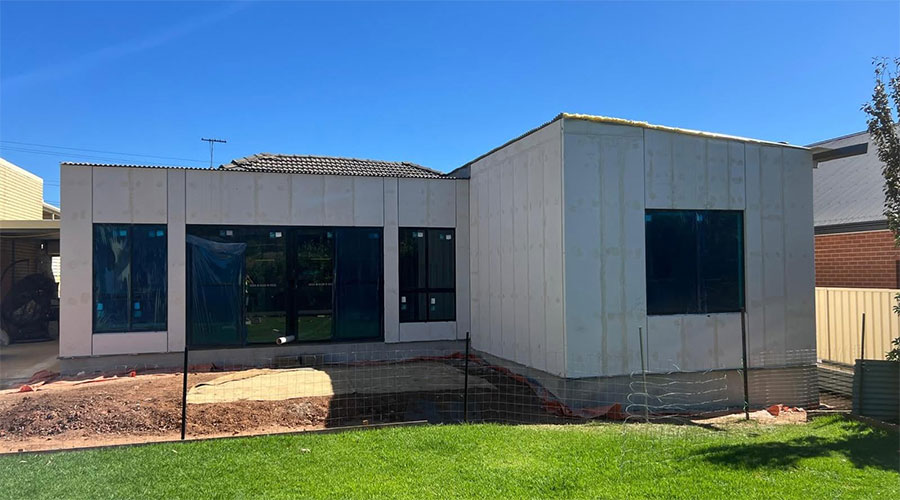
In short, what is a Hebel wall? It is a wall built from lightweight aerated concrete panels. The panels are fixed to the building structure, then finished with render or paint. The result is a solid, modern wall that installs faster than traditional masonry.
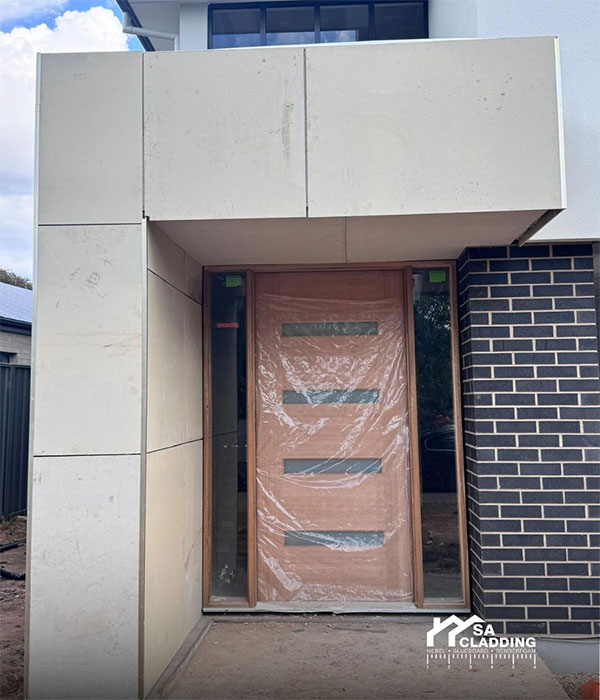
Once installed, Hebel panels accept render and paint readily. Consequently, they suit almost any design style, from smooth contemporary facades to more textured finishes. SA Cladding installs Hebel walls to builder specifications for both homes and commercial buildings across Adelaide.
Benefits for Adelaide Homes
Hebel is popular in South Australia for good reason. Its qualities suit the local climate and modern building goals particularly well. Here are the main benefits for Adelaide homeowners.
Thermal Efficiency
Hebel offers excellent thermal performance. As a result, it helps keep interiors comfortable and reduces the energy needed for heating and cooling. In Adelaide’s warm summers, that benefit really counts.
Fire Resistance
Hebel is non-combustible. As an inorganic AAC product, it does not burn or contribute to flame spread. Therefore, it adds a valuable layer of safety to any home.
Sound Insulation
The air pockets within Hebel also dampen sound. Consequently, a Hebel wall helps create quieter, more peaceful interiors, which is especially welcome near busy roads.
Fast Installation
A single 3-metre Hebel panel is roughly equivalent to 90 bricks. As a result, Hebel installs faster than traditional masonry, which helps keep your build on schedule.
Greener Choice
Hebel is manufactured with lower embodied energy than many alternatives. In addition, its thermal performance reduces energy use once the home is lived in.
Modern Finish
Because Hebel accepts render and paint readily, it delivers a clean, contemporary look. Moreover, it offers the flexibility to achieve a wide range of design styles.
Together, these benefits explain why so many Adelaide builders and homeowners choose Hebel. To explore how it could work for your project, see SA Cladding’s Adelaide Hebel and cladding services.
Hebel Walls vs. Brick Veneer
Brick veneer has long been a standard choice for Australian homes. However, Hebel offers a modern alternative with some clear differences. The table below compares the two at a glance.
| Factor | Hebel Wall | Brick Veneer |
|---|---|---|
| Weight | Lightweight AAC panels | Heavy individual bricks |
| Install Speed | Faster; one panel is roughly 90 bricks | Slower; laid brick by brick |
| Thermal Performance | Excellent, built into the material | Good, though it relies on cavity design |
| Finish | Rendered or painted; modern look | Exposed brick; traditional look |
| Fire Resistance | Non-combustible | Non-combustible |
Both materials perform well, so the right choice depends on your goals. If you want a traditional exposed-brick look, brick veneer still delivers. However, if you prefer a modern rendered finish, faster installation, and strong built-in thermal performance, a Hebel wall is well worth considering.
Not sure which suits your project best? For tailored advice, contact the SA Cladding team for a free consultation and quote.
FAQs: Hebel Walls
What is a Hebel wall made of?
A Hebel wall is made from autoclaved aerated concrete (AAC). This lightweight material combines sand, cement, lime, gypsum, water, and an expansion agent. The mix is then cured under high-pressure steam, which creates millions of tiny air pockets. As a result, the panel is strong yet light, with excellent thermal, acoustic, and fire performance.
Are Hebel walls good for Adelaide’s climate?
Yes. Hebel offers excellent thermal performance, which helps keep interiors comfortable and reduces energy use for heating and cooling. In Adelaide’s warm, dry summers, that benefit is especially valuable. Furthermore, Hebel adds fire resistance and sound insulation, making it a strong all-round choice for South Australian homes.
Is a Hebel wall better than brick veneer?
Neither is simply better; each suits different goals. Brick veneer delivers a traditional exposed-brick look. Hebel, on the other hand, offers a modern rendered finish, faster installation, and strong built-in thermal performance. Ultimately, the right choice depends on your design preferences and priorities. SA Cladding can advise on the best option for your specific project.
Thinking About Hebel Walls for Your Adelaide Home?
SA Cladding installs high-quality Hebel walls for homes and commercial buildings across Adelaide. Fully licensed, accredited, and locally experienced. Get expert advice and a free, obligation-free quote.