SA Cladding | Adelaide Hebel Specialists
Hebel Walls vs Brick: Which Is Right for Your Adelaide Build?
A straightforward comparison of Hebel walls and traditional brick, covering thermal performance, cost, speed, acoustics, and fire resistance.
Choosing between Hebel walls and traditional brick is one of the bigger decisions in any Adelaide build. Both are proven, capable materials. However, they perform quite differently on the things that matter most: comfort, cost, speed, and safety. So which one is right for your project?
What This Guide Covers
Below, we compare Hebel walls and brick across four key areas: thermal performance, construction speed and cost, and acoustic and fire-resistant properties. Then we bring it all together in a simple comparison table. Whether you are building new or renovating, this guide helps you weigh the options clearly.
Thermal Performance: Hebel vs Brick
Thermal performance is where Hebel walls really stand out. Hebel is made from autoclaved aerated concrete, which contains millions of tiny air pockets. As a result, the material offers excellent built-in insulation. In turn, it helps keep interiors comfortable and reduces the energy needed for heating and cooling.
Brick also performs reasonably well thermally. However, traditional brick veneer relies on the wall cavity and added insulation to reach a similar level. With Hebel, much of that performance is built into the panel itself. Consequently, in Adelaide’s warm, dry summers, the thermal efficiency of Hebel is a genuine advantage for both comfort and running costs.
In short, both materials insulate well. However, Hebel delivers strong thermal performance built into the panel, which suits South Australia’s climate particularly well.
Construction Speed and Cost Comparison
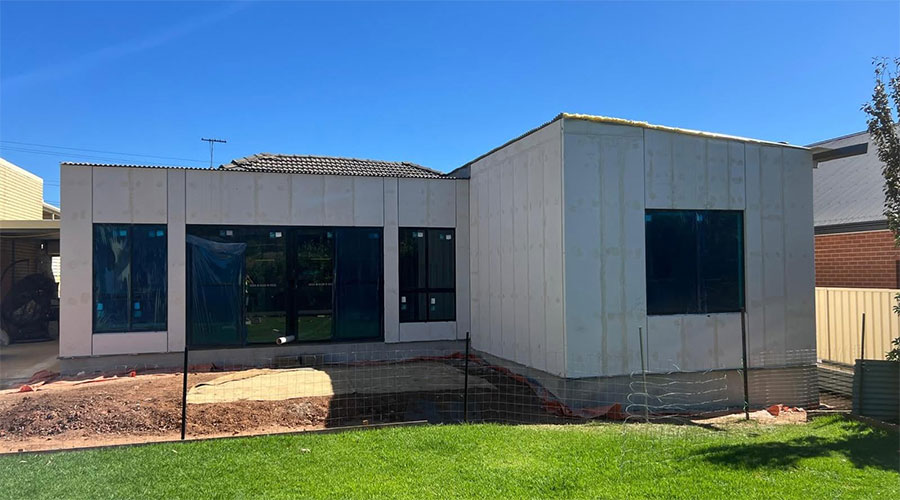
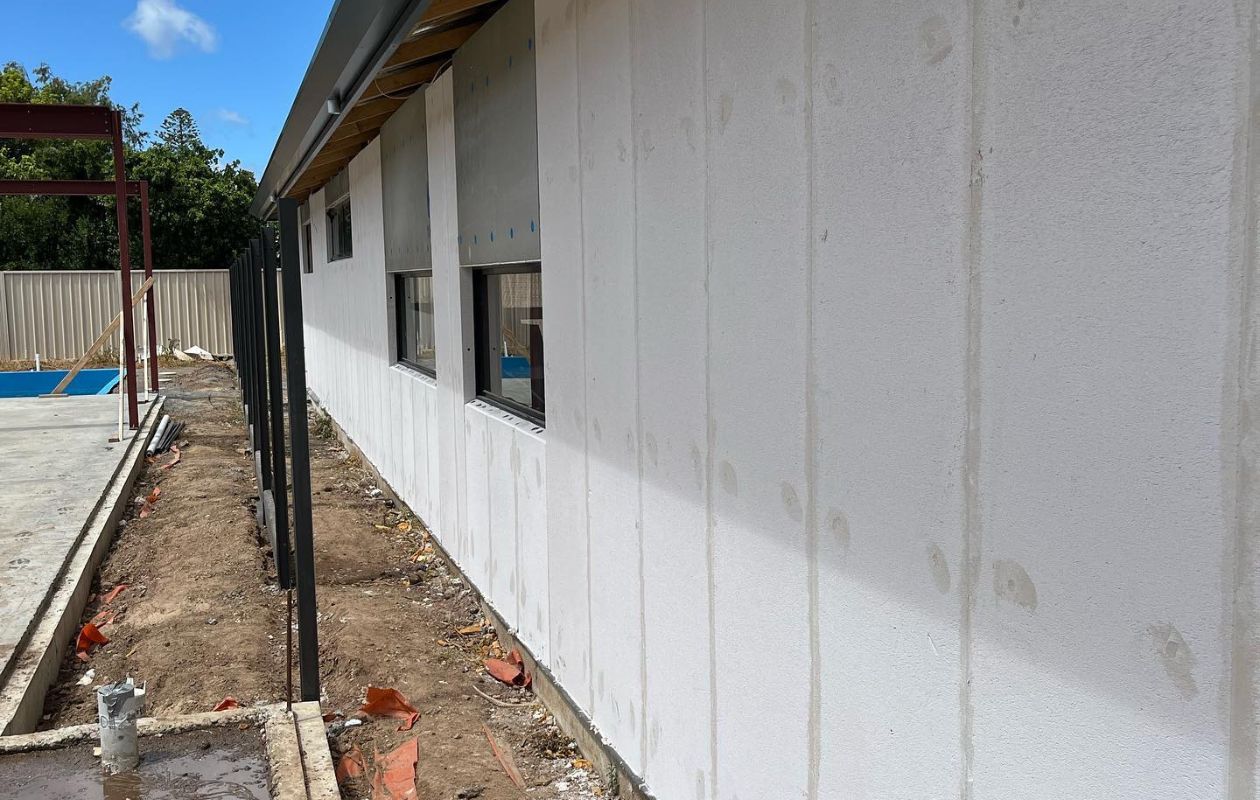
Speed is one of Hebel’s clearest advantages. A single 3-metre Hebel panel is roughly equivalent to 90 bricks. As a result, Hebel installs far faster than laying brick by brick. In turn, that speed helps keep a build on schedule and can reduce labour time on site.
Cost works differently for each material. Brick is a familiar, widely available product. However, its slower installation adds labour time to the program. Hebel, on the other hand, may carry a different product cost, yet its faster installation can offset part of that difference. Because the total cost depends on your specific project, an itemised quote is the only reliable way to compare.
Hebel: Faster Build
One panel replaces around 90 bricks. Therefore, installation is quicker, which supports tighter programs and can reduce on-site labour.
Brick: Slower Build
Bricks are laid individually, so the process takes longer. As a result, brickwork typically adds more labour time to the overall program.
Acoustic and Fire-Resistant Properties
Both materials perform well on safety and sound, though in different ways. Here is how they compare on these two important measures.
Acoustic Performance
The air pockets within Hebel also dampen sound. As a result, a Hebel wall helps create quieter, more peaceful interiors. This benefit is especially welcome near busy roads or in multi-residential buildings. Brick offers reasonable sound resistance too, though Hebel’s structure gives it a natural acoustic edge.
Fire Resistance
Hebel is non-combustible. As an inorganic AAC product, it does not burn, melt, or contribute to flame spread. Brick is also non-combustible, so both materials perform strongly here. For any build, that fire resistance adds a valuable layer of safety.
In summary, both materials are non-combustible and both resist sound reasonably well. However, Hebel’s aerated structure gives it a natural advantage on acoustic comfort. To explore Hebel for your project, see SA Cladding’s Adelaide Hebel and cladding services.
Comparison Table: Hebel vs Brick
The table below brings the key differences together at a glance. Use it as a quick reference as you weigh up your options.
| Factor | Hebel Walls | Traditional Brick |
|---|---|---|
| Thermal Performance | Excellent, built into the panel | Good, relies on cavity and insulation |
| Install Speed | Faster; one panel is roughly 90 bricks | Slower; laid brick by brick |
| Weight | Lightweight AAC panels | Heavy individual bricks |
| Acoustic Comfort | Strong; air pockets dampen sound | Reasonable sound resistance |
| Fire Resistance | Non-combustible | Non-combustible |
| Finish | Rendered or painted; modern look | Exposed brick; traditional look |
Overall, Hebel walls offer strong thermal and acoustic performance, faster installation, and a modern finish. Brick, meanwhile, remains a solid choice for anyone who wants a traditional exposed-brick look. Ultimately, the best material depends on your priorities.
Not sure which suits your build? For tailored advice, contact the SA Cladding team for a free consultation and quote.
FAQs: Hebel Walls vs Brick
Are Hebel walls better than brick?
Neither is simply better; each suits different goals. Hebel walls offer strong built-in thermal performance, faster installation, good acoustic comfort, and a modern rendered finish. Brick, on the other hand, delivers a traditional exposed-brick look and is a familiar, proven material. Ultimately, the right choice depends on your design preferences, budget, and priorities.
Do Hebel walls install faster than brick?
Yes. A single 3-metre Hebel panel is roughly equivalent to 90 bricks. As a result, Hebel installs considerably faster than laying brick by brick. In turn, that speed can help keep a build on schedule and reduce on-site labour time. For many projects, faster construction is one of Hebel’s most valuable advantages.
Are Hebel walls good for Adelaide’s climate?
Yes. Hebel offers excellent thermal performance, which helps keep interiors comfortable and reduces energy use for heating and cooling. In Adelaide’s warm, dry summers, that benefit is especially valuable. Furthermore, Hebel adds fire resistance and acoustic comfort, making it a strong all-round choice for South Australian homes.
Choosing Between Hebel Walls and Brick?
SA Cladding installs high-quality Hebel walls for homes and commercial buildings across Adelaide. Fully licensed, accredited, and locally experienced. Get expert advice and a free, obligation-free quote.