SA Cladding | Adelaide Exterior Specialists
Render vs Cladding: Which Is Right for Your Adelaide Property?
A practical comparison to help Adelaide homeowners, renovators, and builders choose the right exterior finish, based on appearance, durability, cost, and South Australian conditions.
Walk down almost any street in Adelaide and you will see both: smooth rendered masonry on one block, modern cladding panels on the next. Both are common exterior finish choices for South Australian homes. Both can look exceptional. And both come up regularly when homeowners are planning a renovation or new build and trying to work out which direction to go.
The honest answer is that render and cladding are not competing products. They serve different purposes and suit different projects. The better question is not which one is best in general, but which one is right for your specific property, budget, and long-term goals. This guide covers both systems in straightforward terms so you can make that call with confidence.
If cladding is the direction you are heading, SA Cladding specialises in CFC, Hebel, and stone cladding installation across Adelaide. Visit the exterior cladding Adelaide service page for a full overview.
What Is Render?
Render is a coating, typically cement-based, acrylic, or polymer, applied directly over masonry, fibre cement sheet, or AAC panels to create a smooth, textured, or shaped finish. It is not a structural layer. Its job is to seal, protect, and finish the surface beneath it.
Render has been used on Australian homes for generations. It is flexible in terms of colour and texture, bonds well to masonry and fibre cement substrates, and, when correctly applied and maintained, is durable and weather resistant. In Adelaide’s climate, a well-applied render system holds up reliably against heat, UV, and the moderate rainfall the region receives.
The key limitation of render as a standalone system is that it depends entirely on what sits beneath it. If the substrate moves, cracks, or deteriorates, the render will show it. Render is a finish layer, not a structural solution.
What Is Cladding?
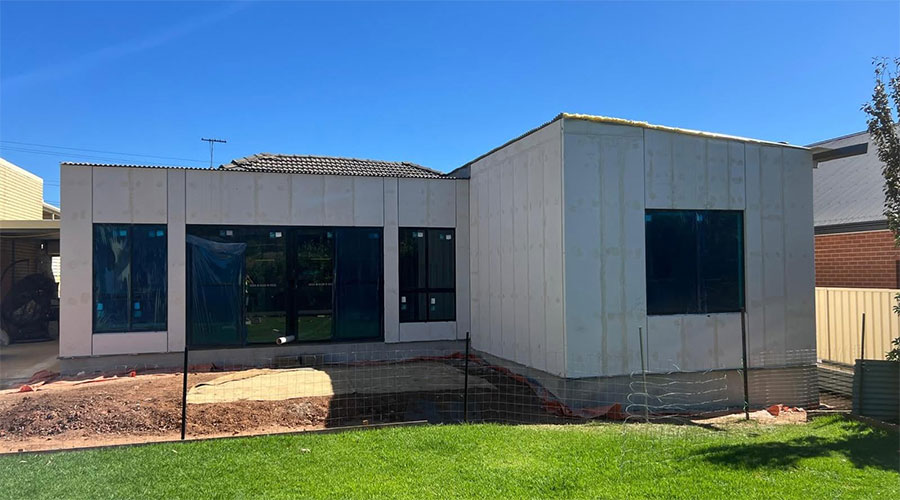
Cladding is a panel or sheet system fixed to the external wall structure of a building. Unlike render, cladding is a physical product with its own thickness, structural integrity, and weather performance characteristics. Common cladding materials include compressed fibre cement (CFC), Hebel and AAC panels, stone veneer, and metal systems.
Importantly, cladding and render are not mutually exclusive. Many cladding systems, including CFC and Hebel, are designed to be rendered or painted as a final finish. In these cases, the cladding provides the structural substrate and weather protection, while render delivers the visual finish. The two systems work together rather than against each other.
When people talk about choosing between render and cladding, they are usually weighing up a rendered masonry or brick exterior against a modern CFC, Hebel, or stone cladding facade. That is the comparison this guide focuses on.
Render vs Cladding: Key Differences
| Factor | Rendered Masonry | Modern Cladding (CFC / Hebel / Stone) |
|---|---|---|
| Appearance | Classic, smooth or textured. Suits traditional and contemporary styles. | Sharp, modern, or natural depending on material. Greater design range. |
| Installation speed | Slower: masonry construction plus render cure time. | Faster: panel systems install quickly and are ready for finishing sooner. |
| Thermal performance | Good thermal mass from masonry. Suited to Adelaide’s temperature swings. | Excellent: Hebel and CFC deliver strong thermal moderation for SA’s climate. |
| Maintenance | Repainting every 10–15 years typical. Cracking from movement needs repair. | Low. CFC and Hebel resist rot, moisture, and termites. Stone needs minimal upkeep. |
| Relative cost | Moderate: masonry plus labour plus render finish system. | Variable: CFC competitive; stone veneer higher. Faster install reduces overall cost. |
| Renovation suitability | Good for refreshing existing masonry. Limited on lightweight framing. | Excellent: CFC installs over prepared substrates without major structural changes. |
| Fire resistance | Good: masonry is inherently non-combustible. | Excellent: CFC and Hebel both suited to BAL-rated construction in SA. |
What Adelaide’s Climate Means for Your Choice
South Australia’s Mediterranean climate of hot, dry summers and mild, wet winters, which places specific demands on exterior building materials. UV exposure is intense, thermal movement between seasons is significant, and coastal suburbs from Semaphore to Glenelg add salt air to the mix.
Render in Adelaide Conditions
A quality render system performs reliably in Adelaide’s climate when correctly applied to a stable substrate. The risk is in thermal movement: render over lightweight framing or poorly prepared masonry is more prone to cracking than render over a solid, stable base. In coastal areas, salt-resistant paint and render systems should be specified.
Cladding in Adelaide Conditions
CFC and Hebel cladding are well-suited to Adelaide’s heat and UV intensity. Both resist moisture, do not rot or corrode, and accept compatible render or paint systems as a UV-protective finish layer. Stone cladding is UV-stable and fade-resistant by nature, making it a strong performer in sun-exposed Adelaide facades without any additional coating.
Which Option Suits Which Project?
There is no single right answer, but there are clear patterns that point toward one system or the other depending on project type:
- ▶
New residential build on a tight timeline. CFC or Hebel cladding. Faster installation, no wet trade delays, and render or paint applied once the frame is complete and watertight. - ▶
Refreshing an existing brick or masonry home. Render is often the most practical and cost-effective option. A fresh render and repaint transforms a dated facade without requiring structural changes to the existing wall. - ▶
Renovation on a lightweight timber frame. CFC cladding. Render does not adhere well to timber and is not designed for flexible, lightweight framing systems. CFC sheet fixed over a prepared substrate is the appropriate choice. - ▶
Feature entry, heritage renovation, or premium facade. Stone cladding or stone veneer. The natural texture and visual weight of stone deliver a result that render cannot replicate, particularly on heritage character homes where authenticity matters. - ▶
Multi-residential or commercial development. Hebel or CFC cladding systems. Speed, compliance, thermal performance, and acoustic properties all point toward panel systems for larger-scale projects where programme and building code requirements drive material selection.
Can You Use Both Render and Cladding on the Same Property?
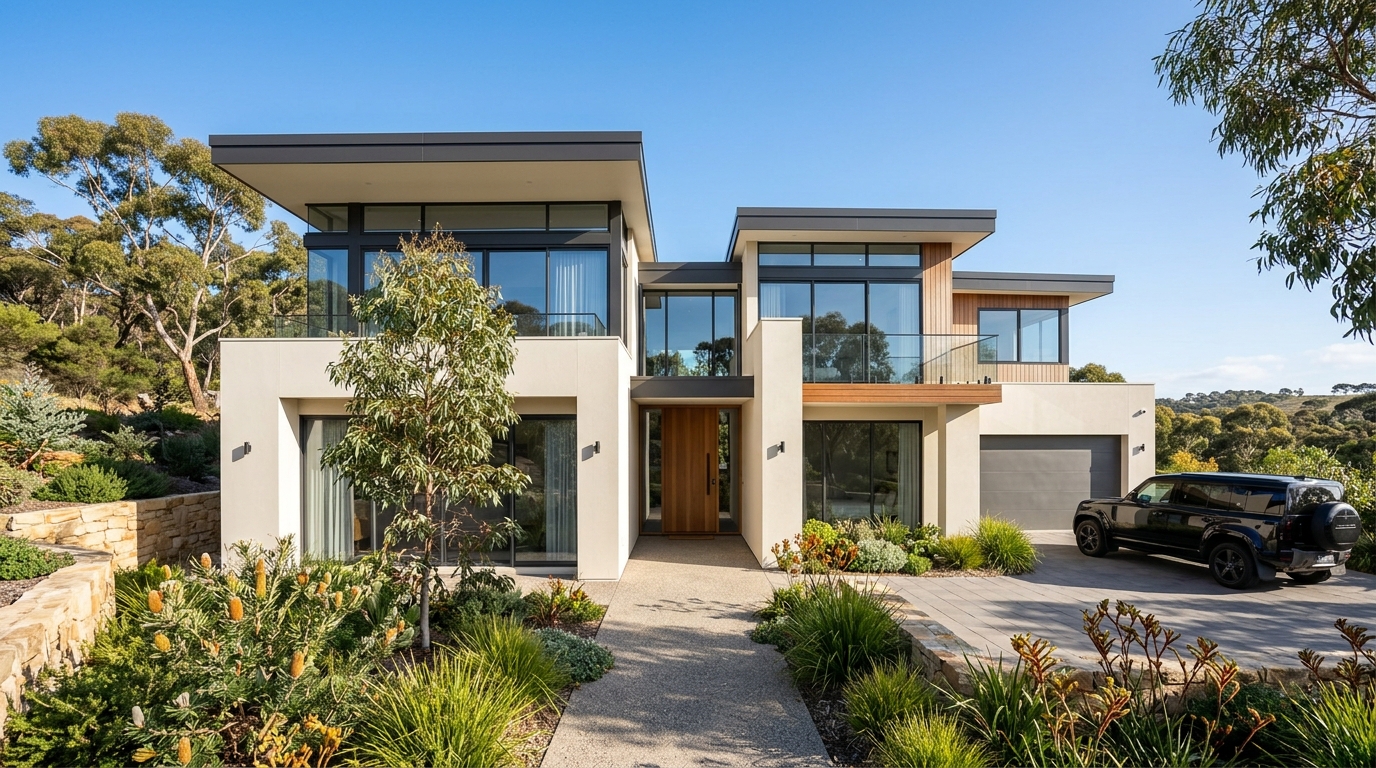
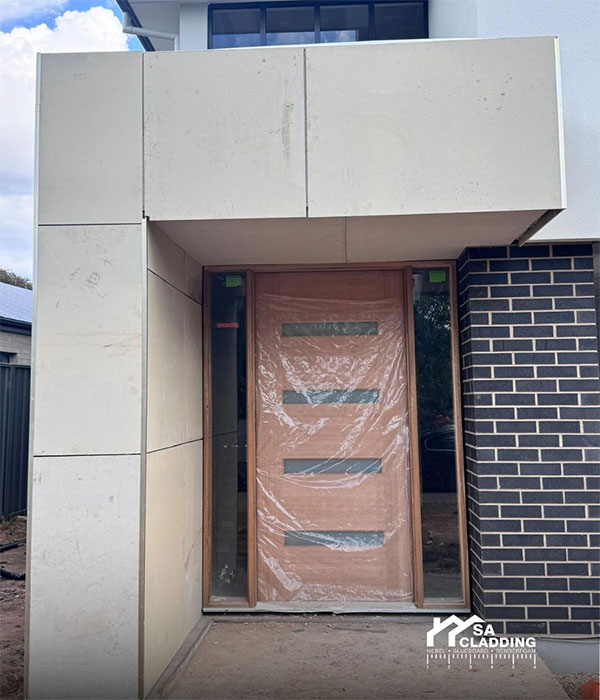
Yes, and it is a common approach for contemporary Adelaide homes. Many projects combine rendered masonry on the main body of the facade with CFC or stone cladding used as a feature element on entry columns, garage fronts, upper storeys, or boundary walls. Used together, the two finishes create visual contrast, depth, and architectural interest that a single material cannot achieve on its own.
In this scenario, the render work and the cladding work are typically handled by separate trades. SA Cladding focuses specifically on the cladding component, installing CFC, Hebel, and stone systems to Australian Standards. If your project includes both a rendered section and a clad section, SA Cladding can take care of the cladding scope while you coordinate your renderer separately.
If you have decided that cladding is the right choice for your Adelaide project, whether for the full facade or a feature section, contact the SA Cladding team to discuss your scope and get a free, itemised quote.
Ready to Move Forward with Cladding for Your Adelaide Property?
SA Cladding’s family-owned team of licensed Adelaide specialists installs CFC, Hebel, and stone cladding across residential and commercial projects. Get a free, itemised quote with no obligation.