SA Cladding | Adelaide Cladding Specialists
Choosing the Right Cladding Material for Your Adelaide Build
A straightforward builders cladding guide for Adelaide, comparing Hebel, stone, timber and CFC on climate, fire safety and long-term upkeep.
Walk any display village or building site in Adelaide and the same question plays out on every facade: which cladding material is the right one? Hebel, stone, timber and CFC all have loyal fans, and each earns its place on the right project. However, the best choice depends on your site, your budget, your BAL rating and how much upkeep you are honestly prepared to take on.
What This Guide Covers
We created this builders cladding guide as a single, practical reference for builders and homeowners alike. First, we look at the key factors Adelaide’s climate demands from any exterior. Next, we analyse four popular materials one by one. Finally, we cover fire resistance, BAL ratings and maintenance, so you can shortlist with confidence.
Key Factors for Adelaide’s Climate
Adelaide’s climate is demanding, and any cladding you choose has to earn its keep. Before comparing materials, it helps to understand exactly what your exterior is up against.
Summer Heat & UV
Long runs of 35 to 40 degree days test every material. Consequently, your cladding must resist warping, fading and movement through repeated heat cycles.
Bushfire Risk
The Adelaide Hills and many fringe suburbs sit in bushfire prone areas. As a result, cladding there must meet the BAL rating assessed for the site.
Winter Rain & Moisture
Most of Adelaide’s rain arrives in winter. Therefore, cladding needs to shed water reliably and resist rot, swelling and moisture damage year after year.
Coastal Salt Air
Western and coastal suburbs add salt spray to the mix. Salt accelerates corrosion and surface wear, so finishes and fixings must be specified to handle it.
Energy Efficiency Rules
New homes must meet strict energy standards. Accordingly, the wall system’s insulation performance directly affects compliance and running costs.
Maintenance Appetite
Be honest about upkeep. Some materials look after themselves for a decade, while others ask for attention every year or two to stay at their best.
Material Analysis: Hebel
On most Adelaide sites, the builders cladding conversation starts with Hebel. It is a lightweight autoclaved aerated concrete (AAC) panel, cured under high-pressure steam so that millions of tiny air pockets form through the material. The result is a solid, rendered wall that goes up remarkably fast.
Strengths
Built-in thermal and acoustic insulation keeps homes comfortable and quiet. Hebel is non-combustible and meets the requirements of every BAL category. Moreover, a single 3-metre panel covers roughly the same area as 90 bricks, so large walls progress quickly and predictably.
Considerations
Hebel relies on a quality coating system, because the render and paint do the weather protection. Its surface is softer than CFC, and correct fixing, jointing and coating determine long-term performance. Therefore, professional installation is essential rather than optional.
Best suited to whole-of-home walls, townhouses and multi-residential projects. SA Cladding provides Hebel installation to builder specifications, as well as complete Hebel supply and installation packages that include rendering and painting.
If your project specifies AAC blocks rather than panels, see our Hebel block supply and installation service.
Material Analysis: Stone Cladding
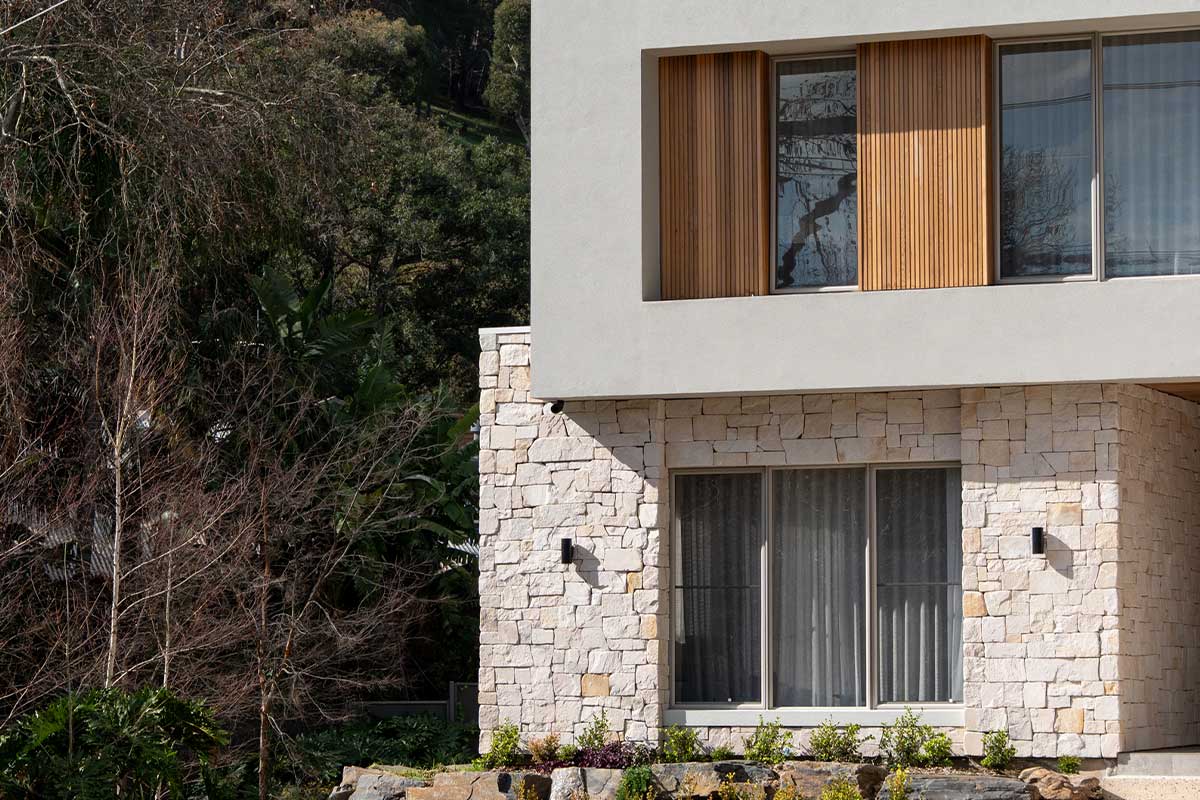
Stone delivers a premium, natural look that nothing else quite matches. Options range from stack stone and veneer panels through to larger format pieces, all fixed over a properly prepared substrate for a lasting result.
Strengths
Stone is non-combustible, extremely hard wearing and ages gracefully under harsh sun. In addition, it adds genuine street appeal and long-term value, which is exactly why it features on so many high-end Adelaide facades and entries.
Considerations
It is typically the most expensive option per square metre, and its weight demands correct substrate preparation and fixing. For that reason, stone usually appears on feature areas rather than entire homes, where its impact per dollar is greatest.
Best suited to feature walls, entries, blade walls and alfresco areas. To compare stack stone, panel and veneer options, explore stone cladding in Adelaide with SA Cladding.
Material Analysis: Timber Cladding
Timber brings a warmth and texture that many owners love, and it remains popular for coastal and character styles. However, it asks more of you than any other material on this list, so it deserves an honest assessment.
Strengths
Natural grain and warmth, a renewable resource, and a lightweight board that is easy to work with. Furthermore, it can be stained, oiled, painted or left to silver off naturally, which gives designers plenty of creative range.
Considerations
Timber is combustible, so bushfire prone sites are limited to specific bushfire-resisting species, generally only up to BAL-29. It also needs recoating every one to three years, and Adelaide’s UV and heat accelerate fading and movement. Termite protection matters too.
Best suited to sheltered feature areas, screening and low-BAL sites where regular upkeep is genuinely part of the plan. In practice, many Adelaide builders now reserve timber for small accents and use lower-maintenance systems for the bulk of the facade.
Material Analysis: CFC Cladding
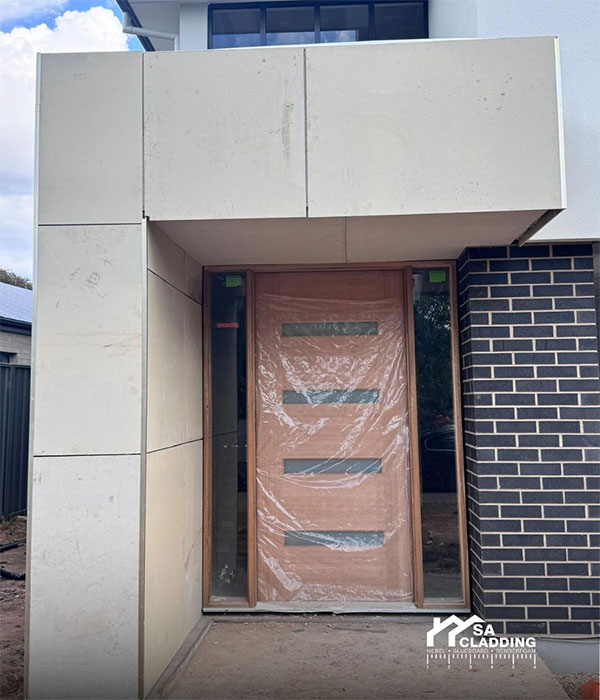
CFC stands for compressed fibre cement: sheets of cement, cellulose fibres and sand pressed together under high pressure. That compression makes the sheet dense, hard and dimensionally stable, which is why it holds such crisp lines.
Strengths
CFC resists moisture, rot, termites and impact, and it keeps its shape through Adelaide’s heat. Because it accepts paint or render, it suits everything from sharp modern facades to classic profiles, and its upkeep demands are genuinely low.
Considerations
The sheet itself offers little built-in insulation, so thermal performance comes from the wall frame. It also needs a painted or rendered finish, and cutting requires dust control and safe work practices, which is one more reason to use licensed installers. For help planning the installation, see our cladding installers page.
Best suited to sheeted facades, upper storeys, parapets and feature entries. For the full supply and installation service, see Adelaide CFC cladding by SA Cladding. You can also compare wall panel options and decorative cladding finishes for feature areas.
Fire Resistance and BAL Ratings
For homes in the Adelaide Hills and fringe suburbs, the BAL rating shapes every builders cladding shortlist before style even enters the conversation. BAL stands for Bushfire Attack Level, assessed under Australian Standard AS 3959. The scale runs from BAL-LOW through BAL-12.5, 19, 29 and 40 up to BAL-FZ, or Flame Zone, based on vegetation, slope and distance from the hazard.
| Material | Fire Behaviour | Typical BAL Suitability |
|---|---|---|
| Hebel | Non-combustible AAC | Meets the requirements of all six BAL categories, including BAL-FZ |
| Stone | Non-combustible material | Suits all BAL levels; the full wall system must still comply |
| CFC | Non-combustible fibre cement sheet | Sheets 6 mm or thicker are accepted up to BAL-40 in compliant wall systems |
| Timber | Combustible | Bushfire-resisting species only, generally up to BAL-29 with sarking |
Two practical notes. First, the BAL requirements apply to the whole wall system, including sarking, joints, windows and subfloor details, not just the cladding itself. Second, always confirm the specifics with your building surveyor or certifier before locking in materials, because the assessed BAL for your block governs exactly what is permitted.
Maintenance Requirements
Maintenance is where the four materials separate most clearly over a twenty-year view. Here is what each typically asks of you once the build is finished.
| Material | Typical Upkeep | Effort |
|---|---|---|
| Hebel | An occasional wash; recoat the render or paint as the finish weathers | Low |
| Stone | An occasional wash; inspect mortar joints and fixings periodically | Low |
| CFC | An occasional wash; repaint roughly every decade; check sealed joints | Low |
| Timber | Oil or stain every one to three years; watch for fading, splits and pests | High |
If low upkeep is a priority, Hebel, stone and CFC all deliver, which is exactly why they dominate modern Adelaide builds. Timber can absolutely work too, provided the recoating schedule genuinely suits your lifestyle rather than fighting it.
Ultimately, most projects land on one of two answers: a single low-maintenance system across the whole home, or a considered mix, such as Hebel walls with a stone or CFC feature. Every site, budget and BAL rating is different, so tailored advice beats a rule of thumb every time. For a clear recommendation on your project, contact the SA Cladding team for a free consultation and itemised quote. For a residential overview, read about house cladding in Adelaide, or explore our broader cladding solutions.
FAQs: Choosing Cladding in Adelaide
What is the most popular builders cladding choice in Adelaide?
Hebel leads most shortlists for whole-of-home walls, especially on townhouse and volume projects, thanks to its speed, insulation and fire performance. CFC follows closely for sheeted facades and feature detailing, while stone remains the premium pick for entries and feature walls. Ultimately, the right choice depends on your BAL rating, budget and design goals.
Which cladding is best for bushfire prone areas?
Non-combustible materials are the safest starting point. Hebel meets the requirements of all six BAL categories, stone is non-combustible, and CFC sheets are widely used in high BAL wall systems. Timber is limited to bushfire-resisting species, generally up to BAL-29. Always confirm the exact requirements for your site’s assessed BAL rating with your building certifier.
Which cladding material needs the least maintenance?
Hebel, stone and CFC are all genuinely low maintenance. An occasional wash and a recoat as the finish weathers is usually all they ask, and stone needs even less. Timber sits at the other end of the scale, needing oiling or staining every one to three years to stay at its best under Adelaide’s sun.
Choosing Cladding for Your Adelaide Project?
SA Cladding supplies and installs Hebel, CFC and stone cladding systems for homes and commercial buildings across Adelaide. Family owned, fully licensed, and locally experienced. Get expert advice and a free, obligation-free quote.